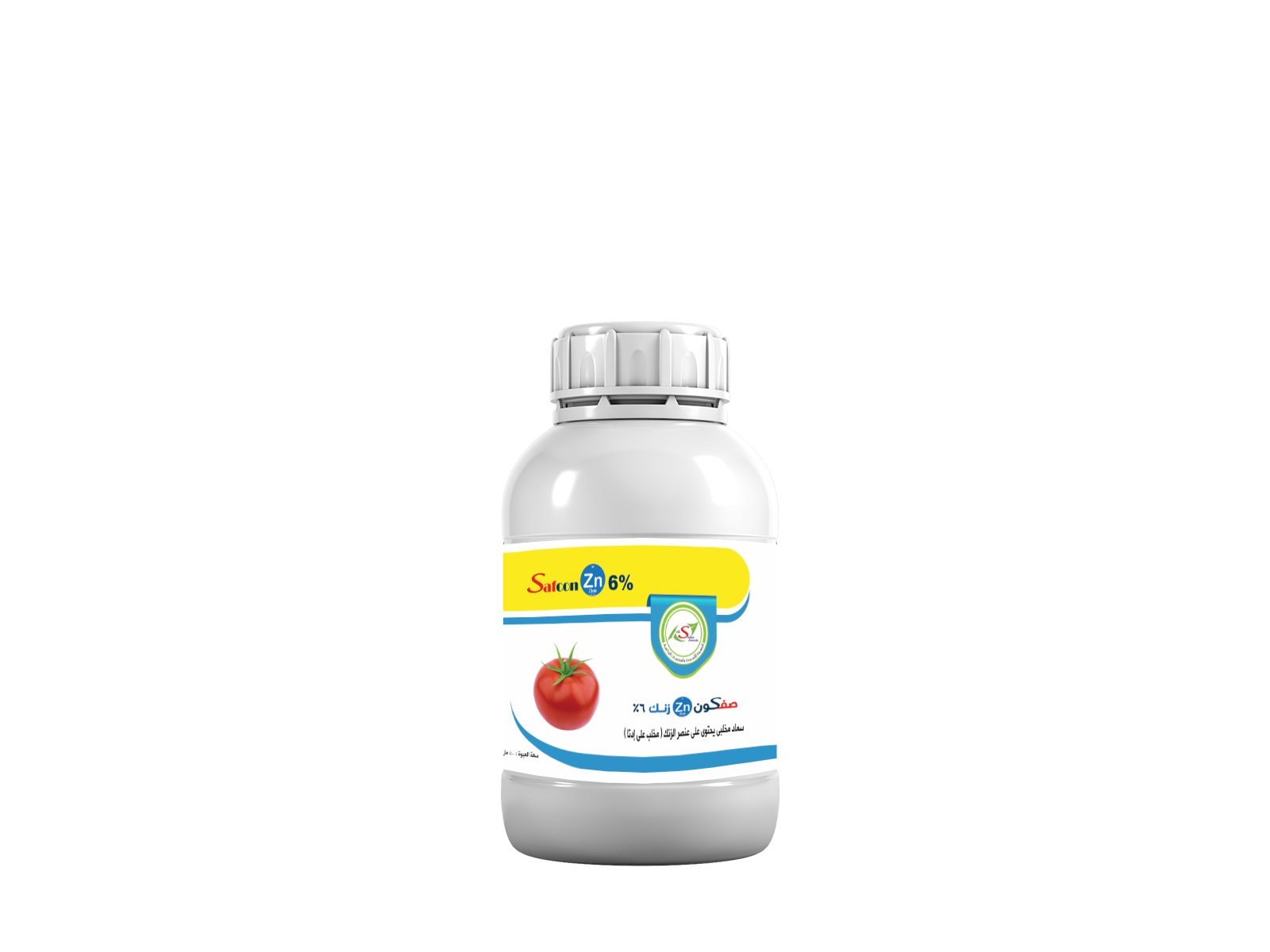
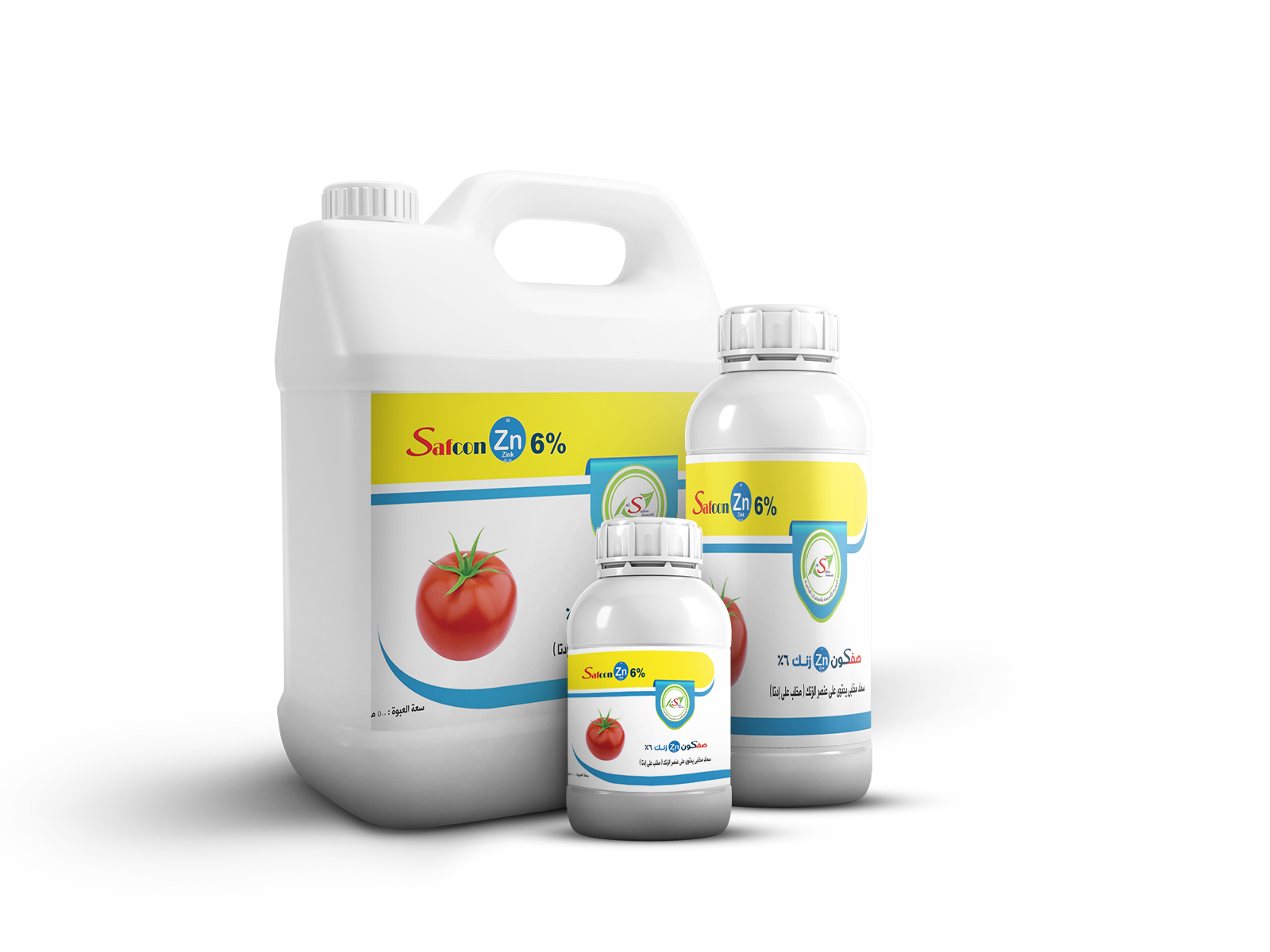
صافكون زنك 6 % Safcon Zn 6 %
Safcon Zn 6 %
(Chelated Zinc EDTA)
Chemical Composition:
Chelated Zinc (Zn) ………….. 6%
A chelated fertilizer containing zinc (chelated with EDTA), formulated in a way that makes it easily absorbable. It works on the formation of indole acetic acid (IAA), and is also essential for protein synthesis and chlorophyll formation. It is further supported by certain compounds that assist in building a strong plant framework.
Characteristics and advantages
Safcon Zinc: A foliar fertilizer containing chelated zinc, prepared from a blend of beneficial additives that help enhance the plant’s utilization of the fertilizer and prime it for high productivity — by supplying zinc in an available and easily absorbable form.
Safcon Zinc: Prevents the appearance of pointed leaf blades, irregular leaf shape, and also treats leaf miniaturization and reduced leaf size.
Safcon Zinc: Treats zinc deficiency symptoms, which appear more on young leaves than older ones, and can lead to terminal bud death in many fruit trees and field crops.
Safcon Zinc: Prevents deficiency symptoms manifested as asymmetrical leaf size, yellow streaks between leaf veins, and increased leaf thickness.
Safcon Zinc: Helps avoid the appearance of zigzag-shaped holes in the following spring, as well as stunting and shortened internodes.
Safcon Zinc: Effective in treating shortened branching, thereby preventing the leaf curl phenomenon.
Safcon Zinc: Is a fundamental component in numerous plant enzymes.
Safcon Zinc: Is involved in the synthesis of certain plant hormones, including indole acetic acid (IAA).
Safcon Zinc: Plays a fundamental role in protein synthesis and the formation of nucleic acids (DNA and RNA), is essential for chlorophyll molecule formation, and plays an important role in pollen grain formation on flower stigmas.
Safcon Zinc: Is important for all plants, with green beans, corn, tomatoes, potatoes, and onions being among the most responsive crops to this fertilizer.
Dosage and how to use
-
- Vegetables & Field Crops: 80–100 g / 100 L water
- Fruit Trees: 80–100 g / 100 L water
- Ornamental Plants: 60–80 g / 100 L water