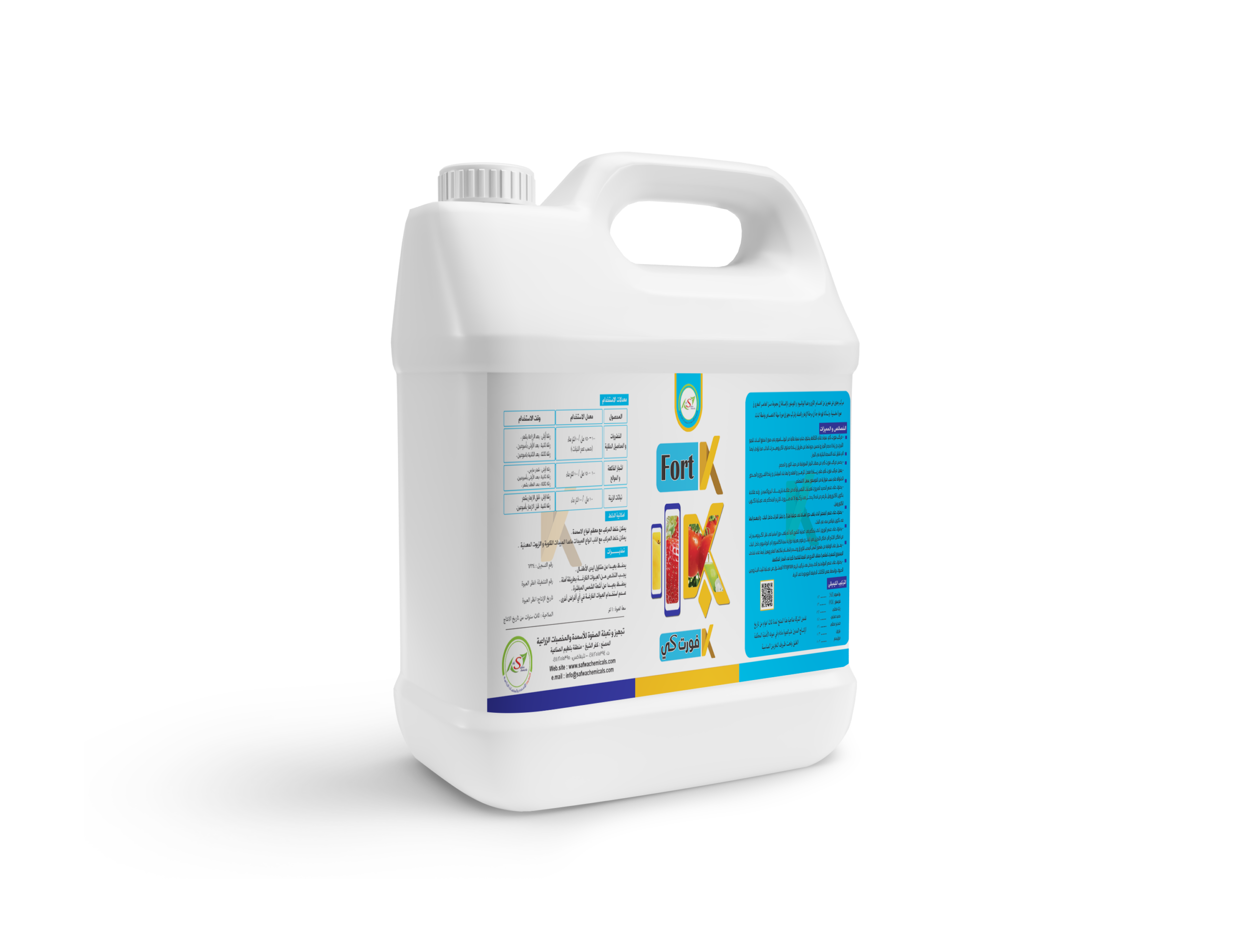
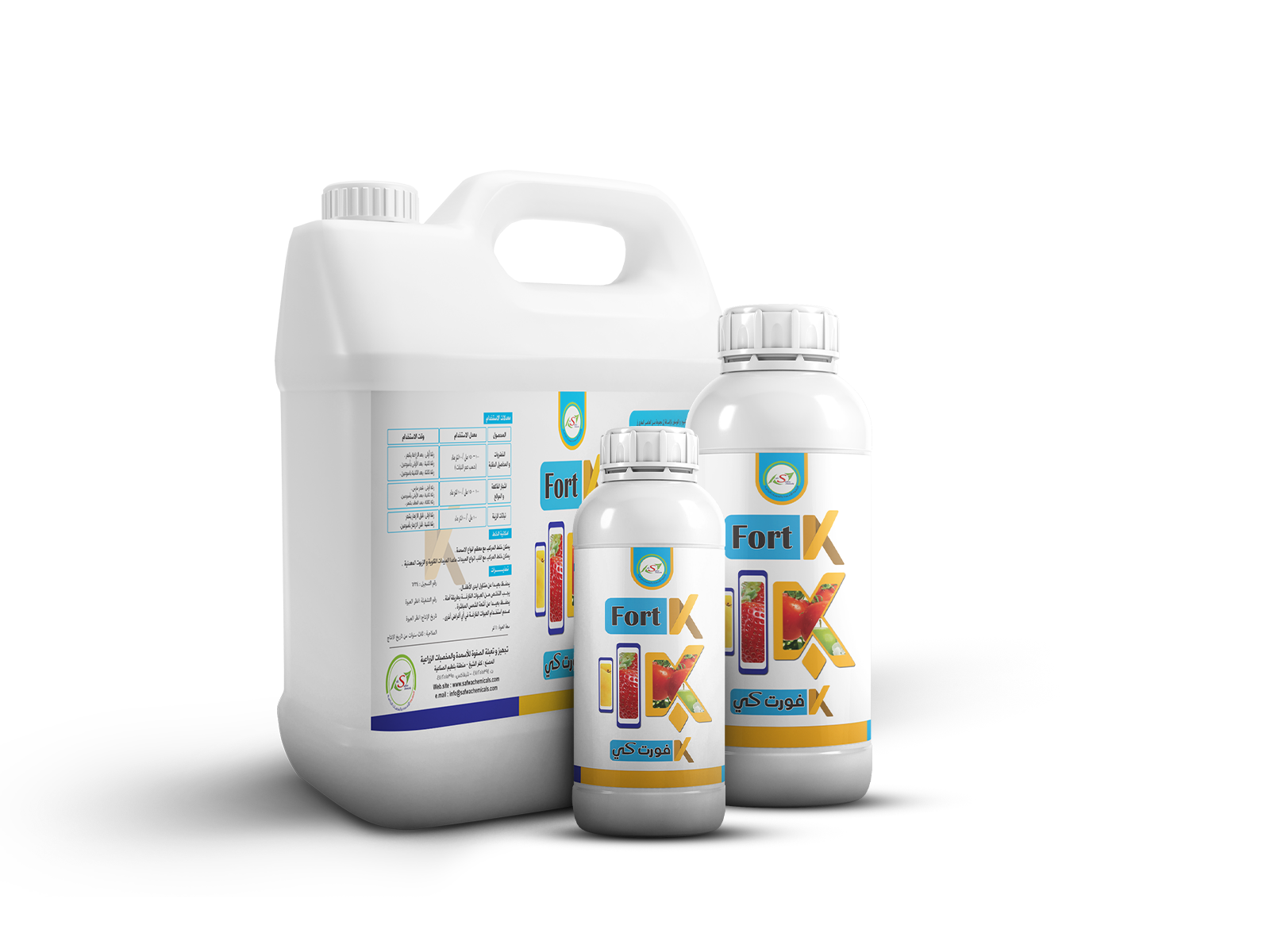
فورت كي Fort k
Fort k
(High Potassium)
Chemical Composition:
- P₂O₅ ………….. 32.6%
- K₂O ………….. 43%
- Zn ………….. 1.3%
- Fe ………….. 1.1%
- B ………….. 0.22%
- Mn ………….. 1.1%
- Mo ………….. 0.02%
A high-density foliar fertilizer containing a high concentration of potassium in a balanced formulation with phosphorus, along with micronutrients in high-purity chelated form — making it the most suitable option for increasing flowering, fruit set, and fruit development, as well as tuber formation and growth. Fort K increases the supply of photosynthetic products to fruits and tubers, resulting in increased size and yield, while improving coloration and raising sugar content in fruits — achieving high overall quality. Fort K also provides plants growing in saline and calcareous soils with the necessary nutrients in appropriate quantities and in an available form through foliar spraying — preventing the appearance of nutrient deficiency symptoms while improving water and solute translocation.
Characteristics and advantages
Fort K: An ideal high-density formulation from pure, easily absorbable sources, containing micronutrients in chelated form balanced with a high concentration of potassium and phosphorus — providing the plant with the necessary energy while facilitating the translocation of water and photosynthetic products toward fruits and tubers, resulting in increased size and final yield. It also contributes to improving coloration and raising sugar content, making it the most suitable option during flowering, fruit set, and fruit and tuber development stages.
Fort K: Contains a high concentration of phosphorus, which is vital for the development of roots, fruits, and seeds. It also improves plant structure and enhances resistance to stress conditions, as it is directly involved in the formation of cell nuclei, enzymes, energy compounds, lipids, and cell membranes.
Fort K: Contains a high concentration of potassium, the primary element responsible for regulating the transfer of nutrients, sugars, proteins, and water within the plant. It therefore plays a major role in increasing the size of fruits and tubers, improving flavor, and regulating cell wall thickness — enhancing the ability to withstand shipping and storage.
Fort K: Reduces fruit cracking, prevents the formation of internal white tissue in tomato fruits, and reduces hollow heart in potato tubers.
Fort K: Contains micronutrients at appropriate concentrations, which stimulate photosynthesis and enzymatic activity while facilitating water movement and the efficient distribution of photosynthetic products to various plant parts — thereby preventing deficiency symptoms and producing a structurally strong plant with enhanced tolerance to environmental and biotic stresses.
Fort K: Suitable for all horticultural and field crops during the flowering, fruit set, and fruit development stages, as well as during tuber formation and development in root and tuberous crops — enhancing tolerance to shipping and storage. It also prevents the appearance of common nutrient deficiency symptoms under environmental stress conditions and in saline and calcareous soils.
Dosage and how to use
| Crop | Application Rate | Application Timing |
|---|---|---|
| Vegetables, Fruit Trees & Field Crops | 100–150 g / 100 L water | First spray at flowering or tuber formation; second spray at fruit set and fruit or tuber development; third spray two weeks later, repeated as needed |
| Ornamental Plants | 100–150 g / 100 L water | First spray at flowering; second spray two weeks after the first |
This fertilizer is important for sizing fruits and tubers, increasing sugar content, improving coloration and quality, and preventing nutrient deficiency symptoms.